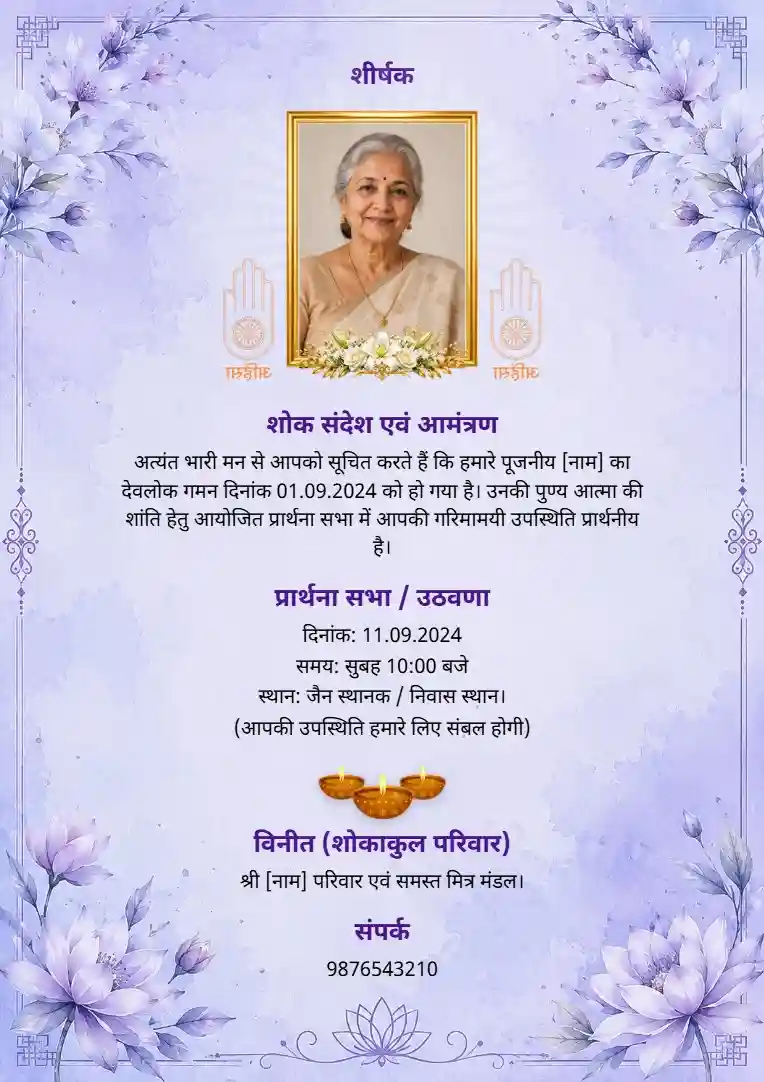
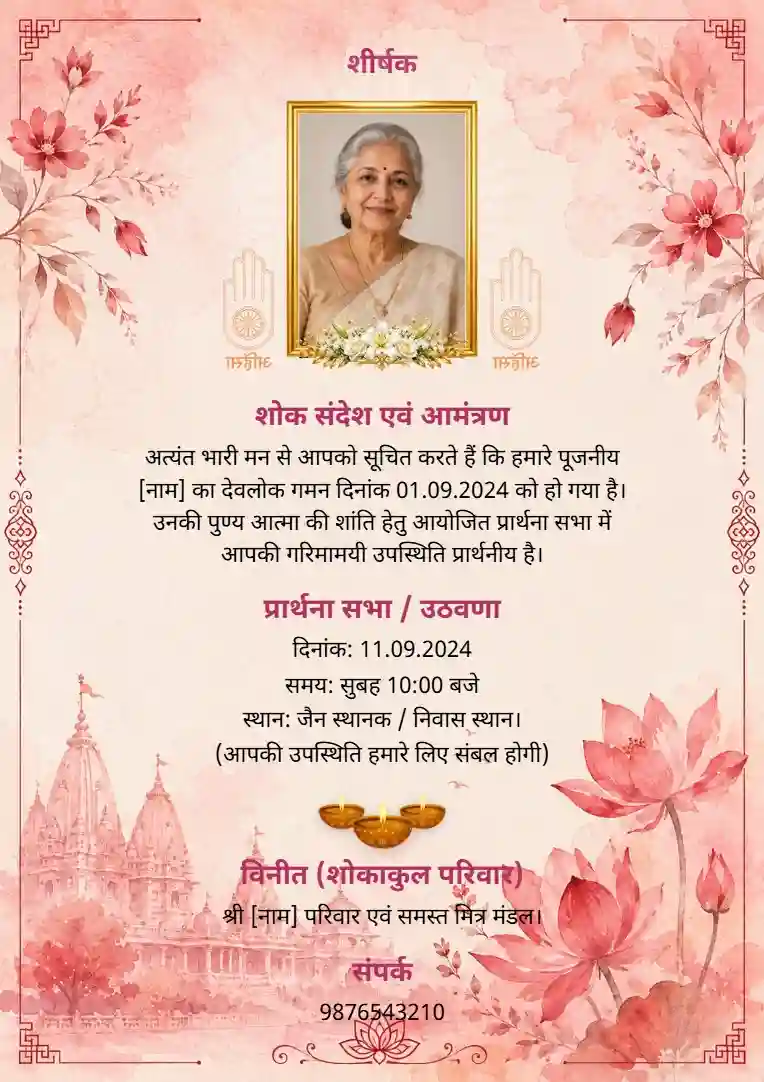
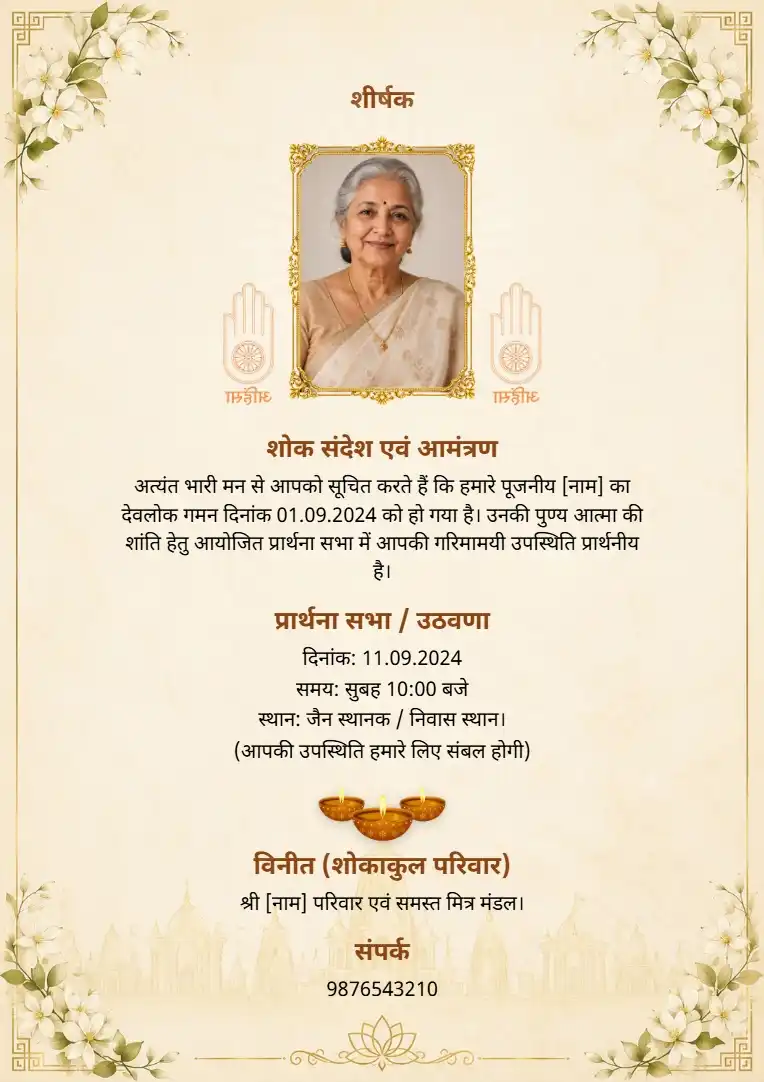
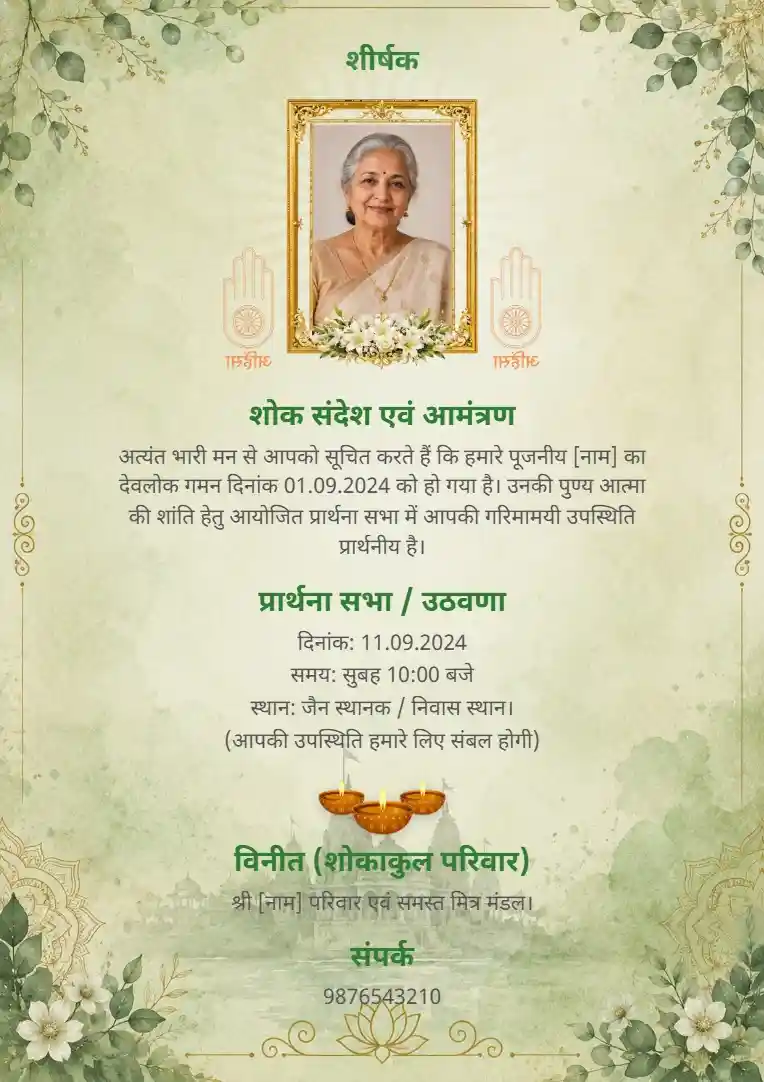
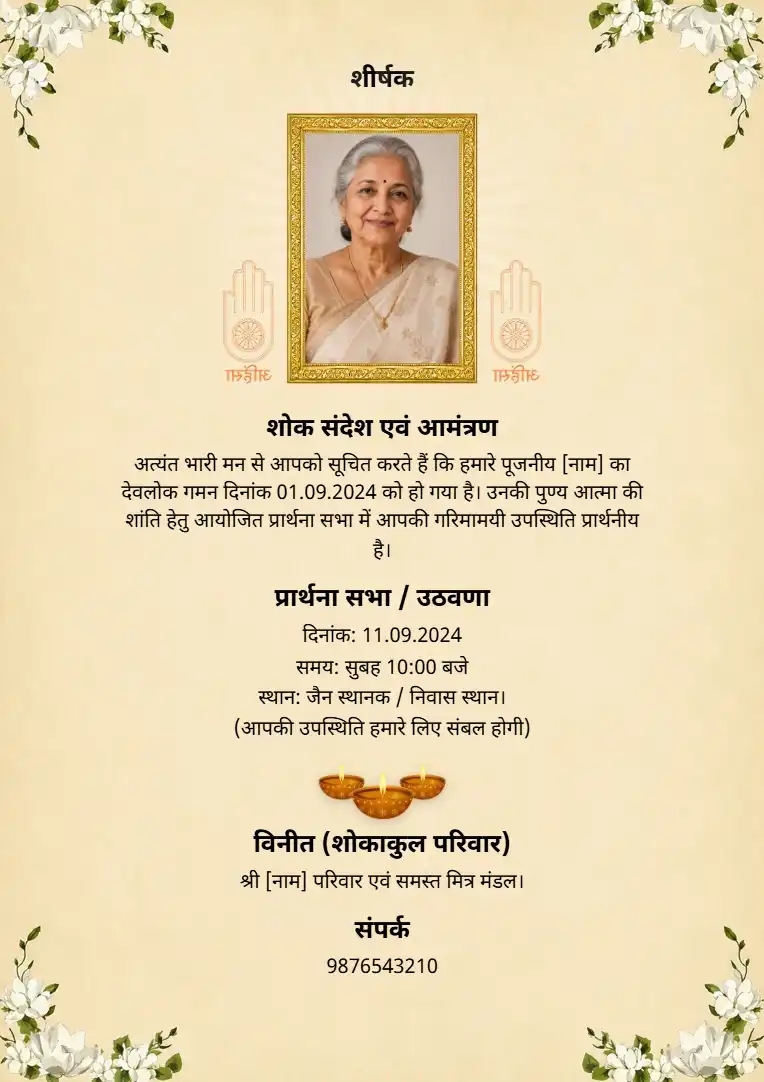
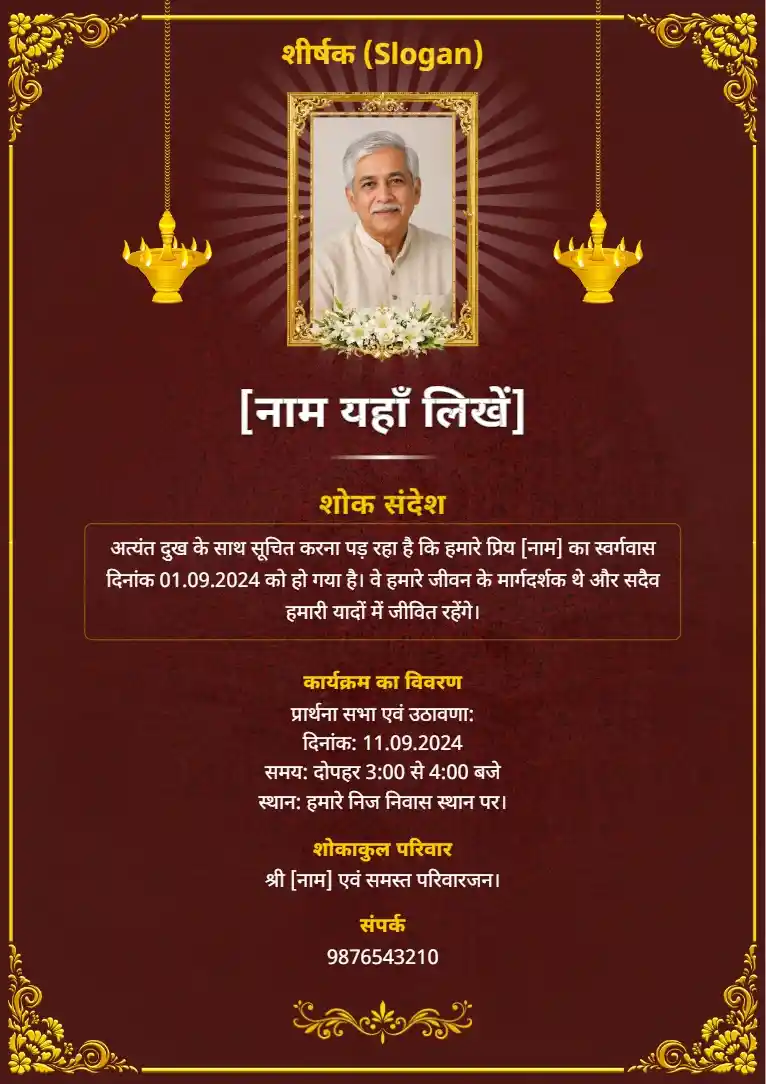
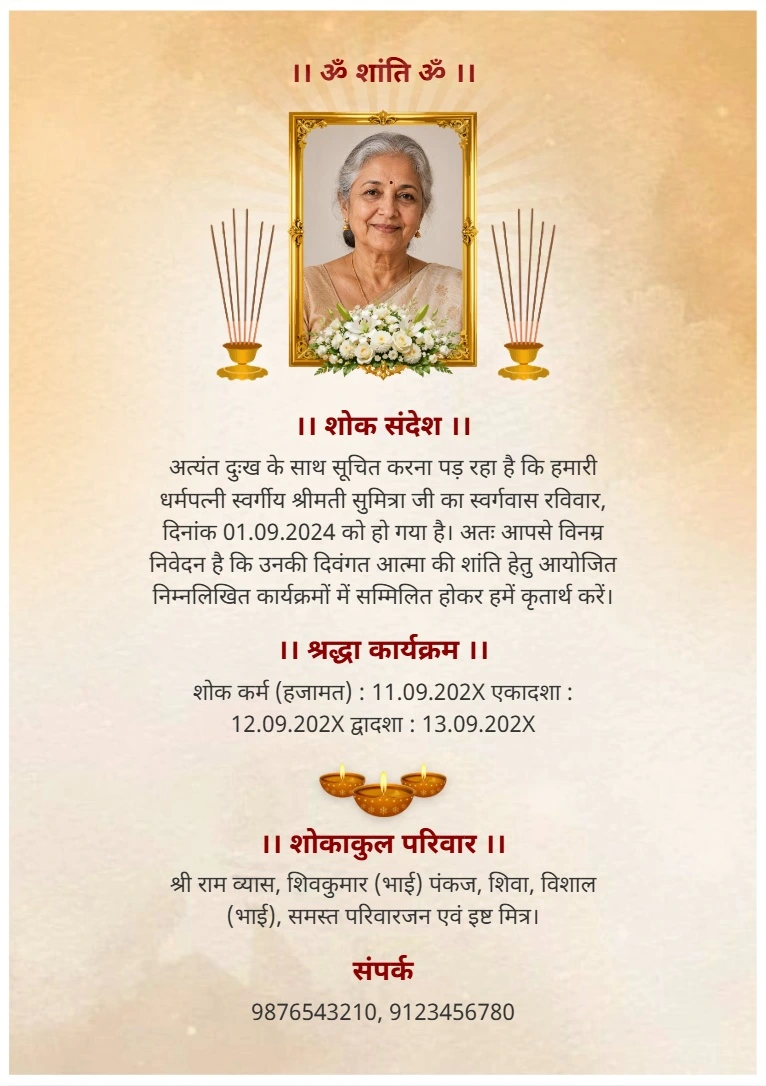
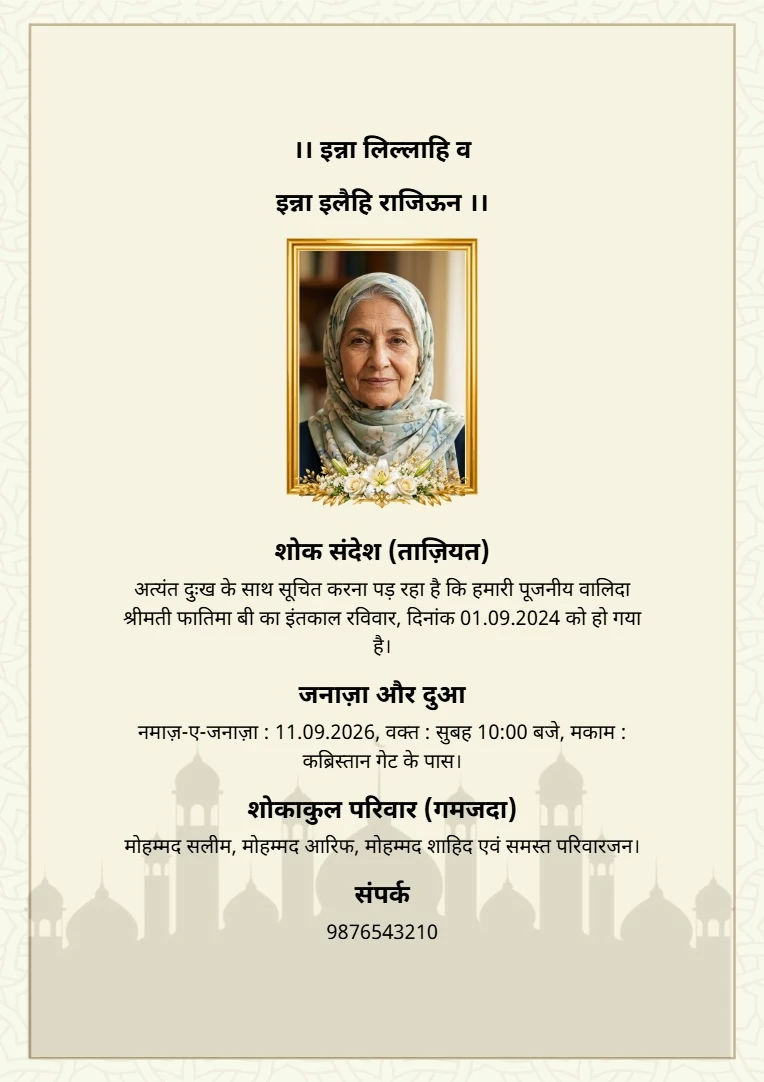
What Information Should a Jain Funeral Card Include?
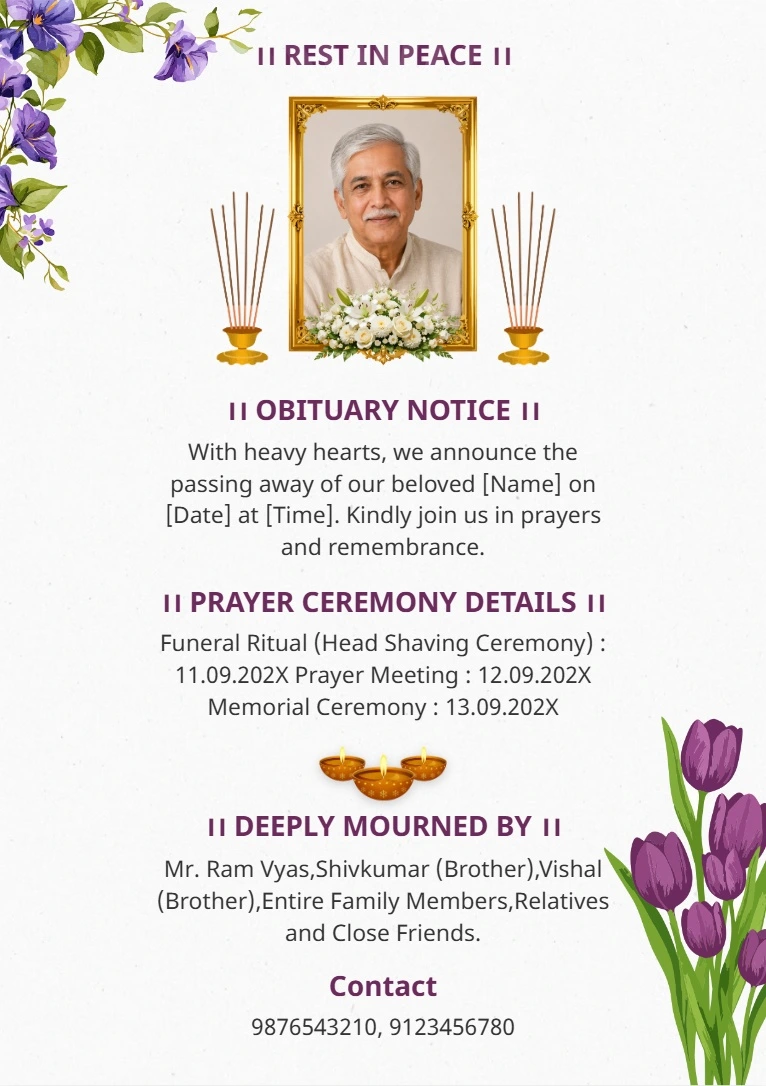
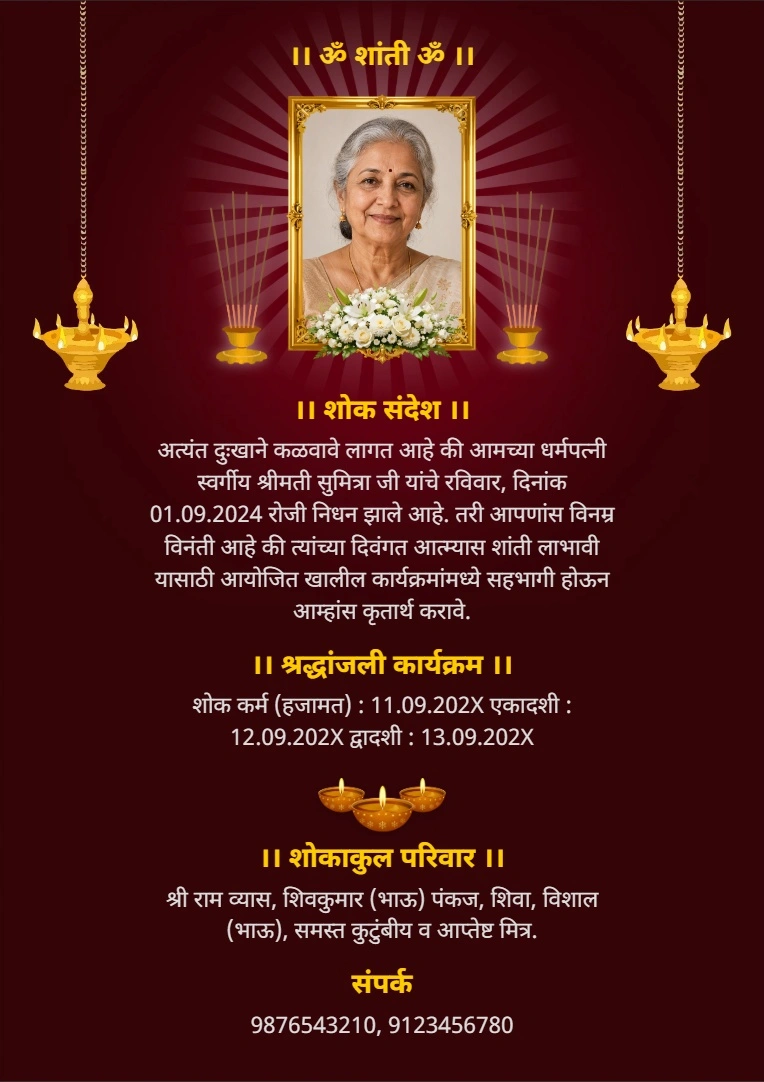
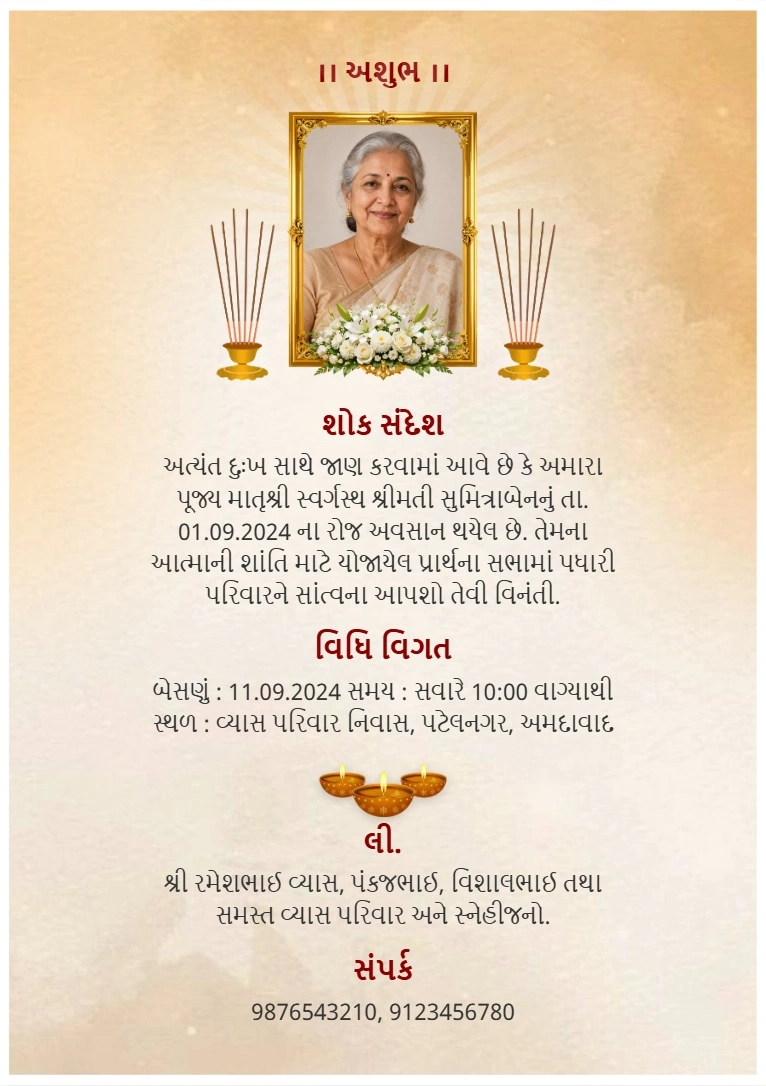
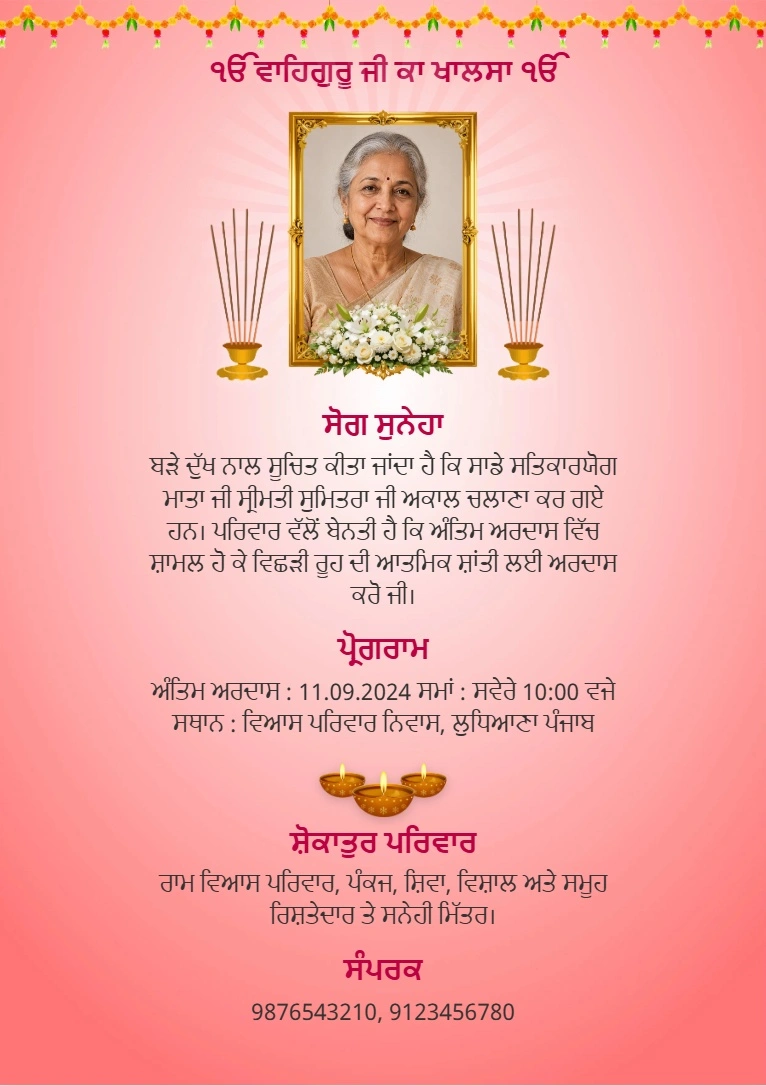
A well-made Jain funeral invitation card contains specific, essential details that help the community make arrangements and pay their respects. The most important element is the full name of the deceased (e.g., Late Shreemati Kamlabai Rameshchand Jain), their age, and the exact date and time of passing.
After the name and date, clearly state the antim yatra time and starting location, followed by the cremation ground address. If there is a Navkar Mantra paath or a terahvin programme, include those timings as well. Our card templates have dedicated fields for all of this — you simply fill in the blanks.
- Full Name: Late Shreemati Kamlabai Rameshchand Jain
- Age & Date of Passing: Age 78 | 14 June 2026, 10:30 PM
- Antim Yatra: 15 June 2026 | 9:00 AM | Departing from Home (Full Address)
- Cremation Venue: Jain Shamshan, Shantivan — After 11:00 AM
- Navkar Mantra / Shloka: Pre-filled in all our Jain templates
- Contact: Always include one family contact number for queries
How to Create Terahvin, Pagdi Rasam & Barsi Cards
In Jain tradition, Teeja (3rd day), Terahvin (13th day), and Barsi (annual remembrance) are deeply significant occasions. Each one deserves its own formal announcement card so that samaj members and relatives can plan accordingly.
For a Terahvin card, clearly mention the time for Navkar Mantra paath, the venue for the gathering, the bhoj timings, and the Pagdi rasam if applicable. Our templates have pre-built sections for each of these — just fill in your specific details.
If you are creating a card for an annual Barsi or Punyatithi, use our dedicated templates. Simply change the occasion type and the rest adapts automatically. You can even include the Vikram Samvat tithi alongside the Gregorian date.
Which Language Should You Choose for the Card?
The Jain community is spread across India — Rajasthan, Gujarat, Maharashtra, Madhya Pradesh, and beyond. Each region has its own language and dialect. That is why ShokSandesh.in offers Jain funeral card templates in Hindi, Gujarati, Rajasthani (Marwari), and English.
If you are from Surat, Ahmedabad, or Vadodara, a Gujarati template will feel most natural. For Jaipur, Jodhpur, or Bikaner, the Rajasthani / Marwari template is ideal. For Delhi-NCR, Mumbai, or Pune, you can choose Hindi or English. For NRI families sharing with relatives abroad, the English template works best.
- Keep the language simple and clear — people are in grief, not in a formal setting
- Begin with a respectful greeting — 'Jai Jinendra' works well as an opener
- You can include both Gregorian and Vikram Samvat tithi if your community uses both
- When sharing on WhatsApp, include the same key information in the caption as well
Why ShokSandesh.in Was Built — A Personal Note
When a loved one passes away, the first hour is the hardest. Twenty-five phone calls arrive before you have even caught your breath. Everyone asks the same questions — when, where, what time. You are in deep grief, and yet you find yourself narrating the same details again and again. That repetition, in those moments, is exhausting in a way words cannot describe.
I watched families go through this — rushing to graphic design shops, paying fees, waiting hours — and getting a card that did not even look right. ShokSandesh.in was built to solve this, specifically for Indian families and the Jain community worldwide.
Today, in under 2 minutes, any family member — even one with zero design experience — can create a professional, print-quality Jain funeral card and send it to every family group, samaj committee, and friend circle in one go. Our users tell us that this one tool removed one major burden during the hardest day of their lives. That is the only goal we have.